Bumusa Residential complex
Architect: Mohammadreza Soleimani
Project Type: Residential
Employer: Ministry of Road and Urban Development
Area: 240000 m2
Location: Abu Musa, Iran
Team: Sina ghazizadeh, Leila Lajevardi, Behrad Soltani
Project Year: 2024
The design of the Bumusa Residential Complex was undertaken with the goal of creating a desirable living space for residents, reducing construction costs, and revisiting the region’s native architectural elements for their application in the project.
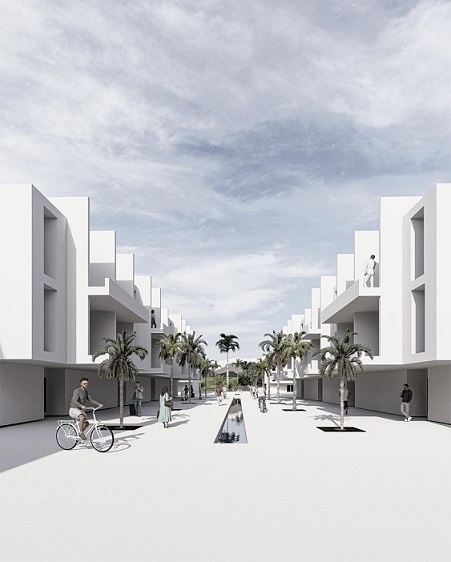
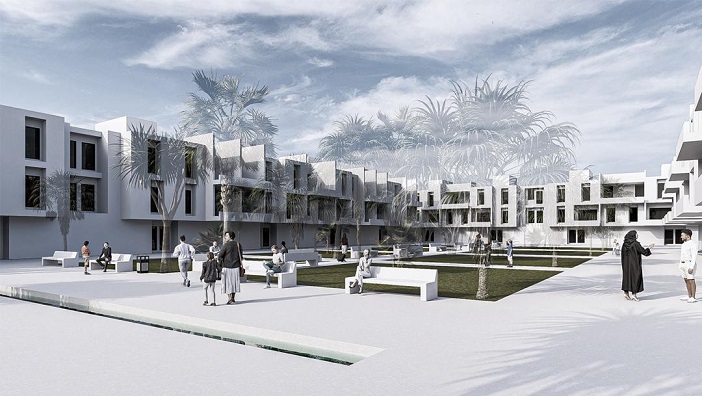
Given these objectives and the large dimensions of the site, the project land was initially divided into two separate sections. Each section was designed as an introverted residential complex with a central courtyard to provide a tranquil living environment for the residents. The division of the complex was structured in a way that by designing three different residential block models and placing them throughout the site in a repetitive pattern, the overall design of the complex would be completed.
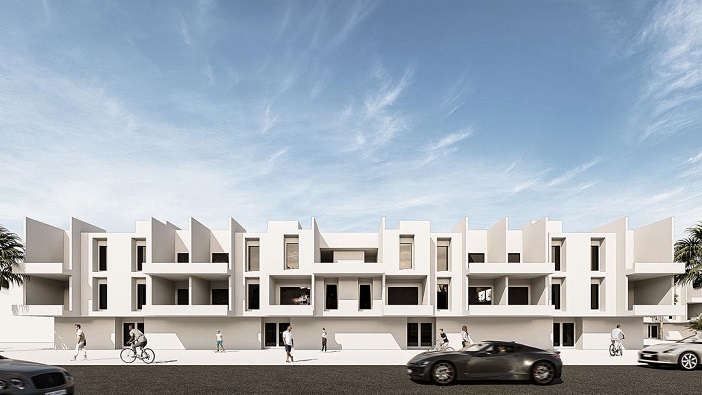
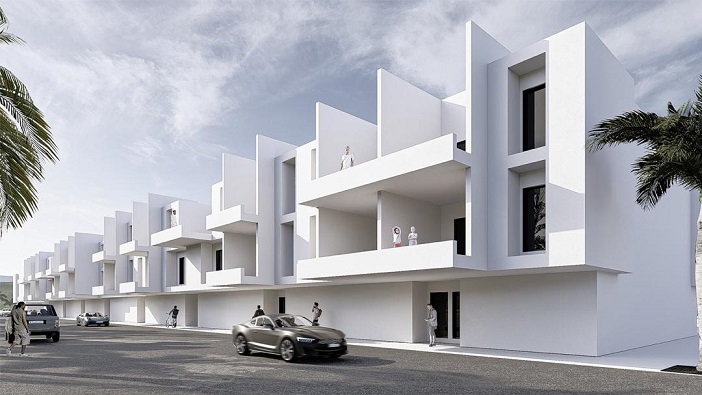
According to the project’s requirements set by the client, three types of residential units with different layouts and sizes were developed, which are consistently repeated in the residential blocks. The residential units were designed linearly to allow for natural ventilation, considering the region’s hot and humid climate. Additionally, large terraces were incorporated into each unit, serving as private courtyards on the upper floors for the residents. The openings on the façades were designed to be elongated and recessed, creating natural shading for the windows.
The units were designed modularly, allowing for high flexibility, so that their size could be increased or decreased as needed. Vehicular access was planned along the southern and northwestern boundaries of the site to ensure the security and privacy of pedestrian pathways and central courtyards.
The proposed construction materials for the buildings have been chosen in light colors to minimize solar heat absorption during the cooler seasons. Additionally, the voids and protrusions on the façade design create effective shading, reducing heat buildup on the building surfaces.