Shiraz Bridge
Architect: Mohammadreza Soleimani
Project Type: Monument
Employer: ShirazMunicipality
Location: Shiraz, Iran
Project Year: 2020
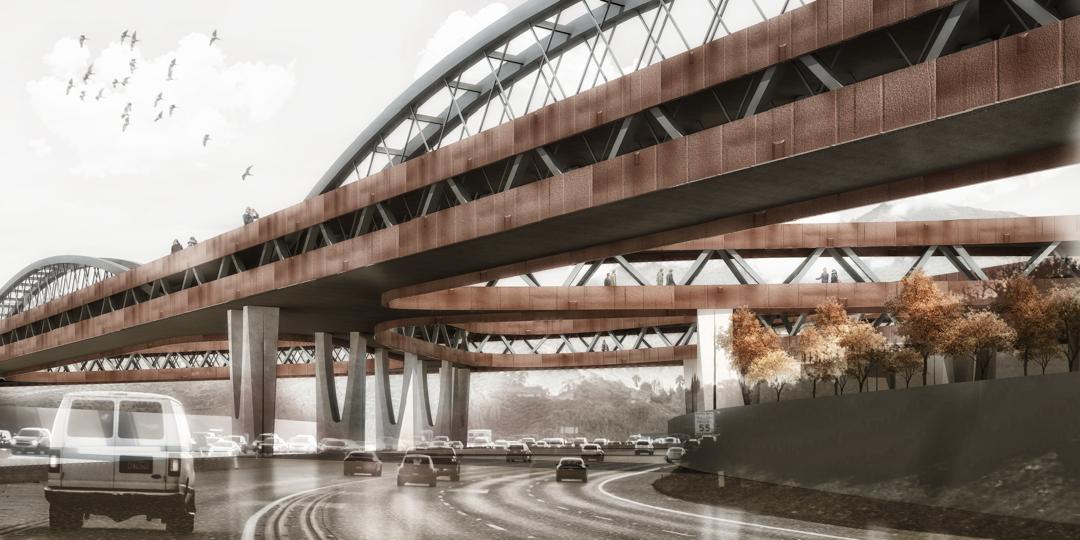
The Life Bridge complex is a collection composed of different functional layers that seeks, within a single unified framework, to achieve various cultural, social, environmental, and other objectives at the neighborhood, district, or city scale.

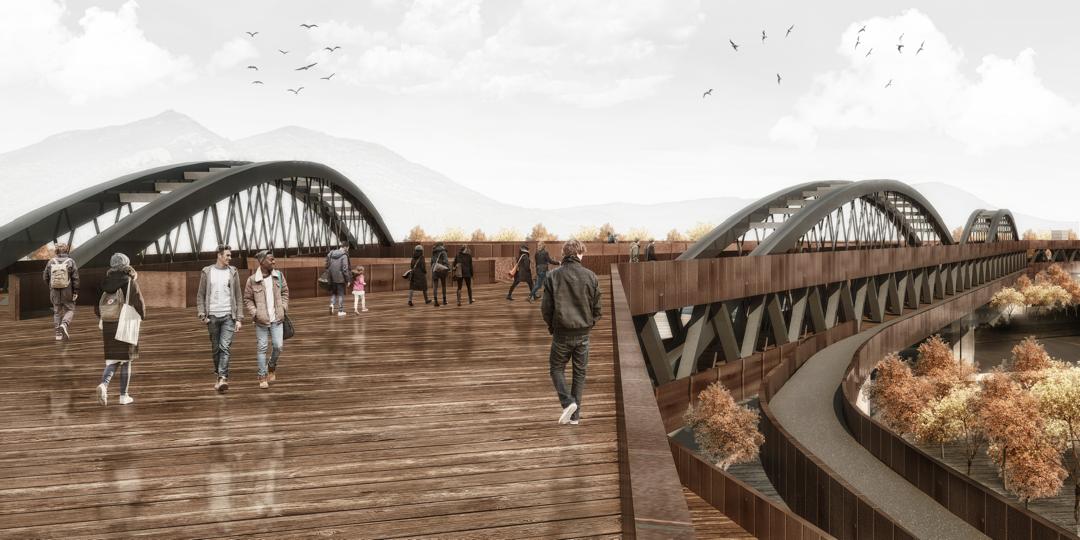
The primary and most important function of the Life Bridge is the essential role of a bridge itself: connecting two edges. On the site’s context, the bridge actually links a series of gardens and green elements across the two edges. In this way a continuous flow of movement is formed along the existing pathways on the site. Initially this connection is made along the shortest possible distance between the two target points so that, in the first step, pedestrians’ need is met.
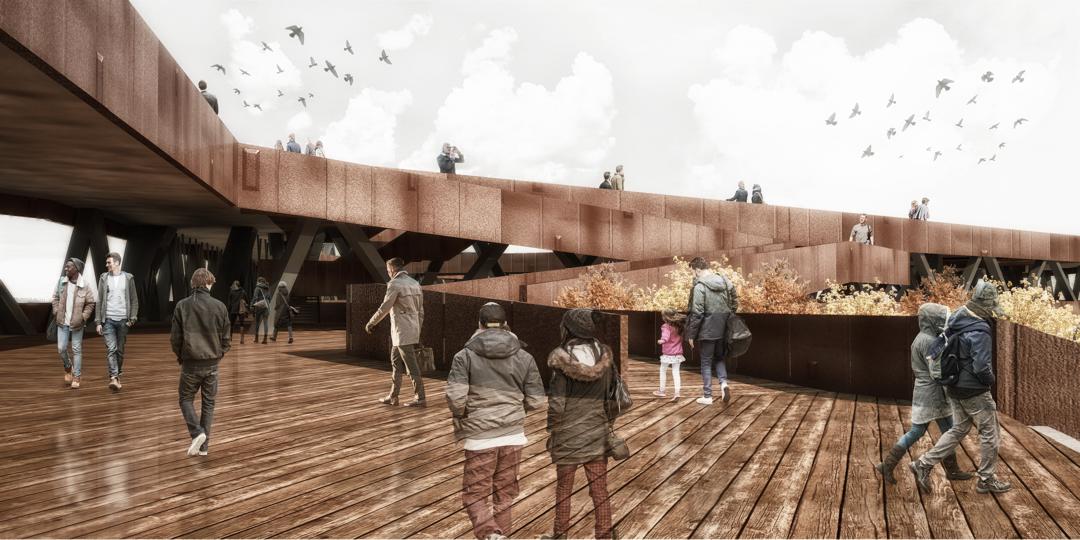
Alongside the direct pedestrian route, a bicycle ramp path has been designed which, given elevation regulations and the constraints at the entrances, becomes a fluid, spiral-like route at the complex’s entrances. The proposed ramp, combined with the stairs, the open-air amphitheater, and other existing elements, has become a distinctive feature and, in a way, defines the complex’s entrances.
In the next phase, to strengthen the tourism and recreational dimension, the bridge is extended along two axes: the northern garden and the existing dry riverbed. New routes are then designed over and along the existing garden and along the river and highway, transforming the bridge from a linear element into a surface-spanning ensemble. The connection of these new routes to the original path creates circuit routes within the complex, producing spatial variety and a sequence of diverse visual experiences along movement corridors.
The design of the complex also pays attention to environmental considerations. Accordingly, at the eastern entrance, openings have been created in the stair areas where several trees are located so they are not harmed, and some trees will need to be relocated to the front parts of the site.
Another issue is the extension of the bridge into the existing garden in the northeast part of the complex, which is proposed and has been carried out with the organizers’ permission. The bridge’s alignment in this section can be adjusted according to the precise locations of the trees to ensure minimal harm to the trees in that area.
Also, to extend greenery across the bridge surface, small continuous green strips have been designed along the edges and throughout the linear movement paths, while larger green areas have been placed at the junctions of those linear routes.